Pipestone Vet Contact Us How To Order Photo Gallery Archive of Articles Management Tips Useful Links

Shepherd’s Choice Management Tips

Click on one of the topics below to find Management Tips for that subject:
Injection Tips    Abortions    Foot Rot    Lambing Tips
Growing Lambs    Nutrition    Coccidiosis    Parasites

(these are helpful management tips taken from our catalog)

Injection Tips

  • 1 mL is the same as 1 cc.

  • We routinely give 1 mL of long acting penicillin S.Q. when docking and castrating lambs and repeat in 7 days.
    All injections should be given Subcutaneous (S.Q., under the skin)

  • One ounce = 30mL.

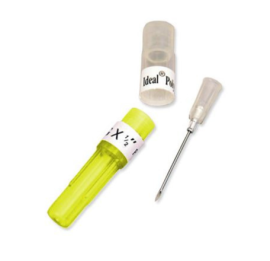
  • A subcutaneous (S.Q. under the skin) injection is given by pulling up a little pinch of skin to make a “tent”. Using a 5/8 inch needle (so you don’t go in one side of the tent and out the other) go into the side of the “tent” and inject the medication/vaccine.

  • Normal sheep rectal temperature is 102°F.

Abortions

  • Abortion vaccine, Chlamydia Psittaci Bacterin and Campylobacter Fetus Bacterin, are essential in any prevention program.

  • To help prevent abortions never feed pregnant ewes on the ground.

  • LA-200 our Aueromycin crumbles or both are our choices to control the spread of Chlamydia in an abortion outbreak.

Foot Rot

  • Koppertox is used for topical treatment of footrot, foot scald, and open sores on feet.

  • Shear Magic Hoof Shears: This is the easiest hoof shears to handle, especially for shepheards with smaller hands.

  • Zinc Sulfate - for use in footbaths to prevent and treat footrot. Mix 8 # of zinc sulfate to 10 gallons of water in footbath. Add one cup liquid laundry detergent.

Lambing Tips

  • NurseMate: We mix 2 heaping measures to 8 oz. of milk replacer.

  • Feeding milk replacer to orphan lambs: Use one of the multiple nipple pails for self-feeding of the milk replacer. Lambs should be fed cold milk rather than warm. Cold milk does not sour as quickly and lambs consume small amount but more often. This is more natural for the lamb and reduces digestive problems. The one problem with feeding cold milk is getting the lambs to start nursing adequate amounts. Warm milk may be used the first week and cold milk thereafter. In a free-choice system, each lamb should consume ½ to ¾ pound of milk replacer powder in solution daily. (2-4 pints of liquid milk).

  • Colostrx: This is a bovine origin E. coli antibodies that is used for lambs that may not have received enough colostrum. Mix ¼ cup of Colostrx powder with ½ cup of already mixed milk replacer. Feed this mixture three times within the first 12 hours of life.

  • Most lambs are underfed. Lambs experience heat loss from birth to 5 hour. A large lamb requires 50 oz. of colostrum the first 24 hours of birth; eight oz. every four hours. Extra large lambs require even more!

  • Inverted Eyelids: Watery eyes in baby lambs is generally inverted eyelids and not pinkeye. The hair of the eyelid is rubbing against and irritating the outside surface of the eye, making it water. The eyelids need to be corrected. I like to use metal wound clips (Michel). The clips are pinched together horizontally, not vertically as one would think. It is generally the bottom lid that is involved. I’ve seen lambs with watery eyes, depressed, head down, and standing around; fix the eyelid and they are jumping and playing around several hours later. Failure to fix the eye can result in permanent damage and blindness.

  • Observe young lambs twice daily for starvation, pneumonia and scours. These are the leading killers of baby lambs.

  • Hypothermia

      Mild Hypothermia any age 99-102° F.
    1. Remove from ewe and dry.
    2. Supplement warm dry heat (100-103° F maximum temperature)
    3. Tube feed 50-100 mL of colostrum or milk/Nursemate
    4. Return to ewe when rectal temperature is nomal (usually 1-3 hours)
      Severe Hymothermia - temperature below 99° F
    1. Under 6-8 hours old same as mild hypothermia
    2. Over 6-8 hours old same as mild hypothermiz plus:
    3. Inject 10 mL of 20% dextrose solution iinto the body cavity 1 inch beside and one inch behind navel using a 20 guage, 1 inch needle.
  • Panamycin 500mg boluses are our choice for untrauterine boluses after a difficult lambing. Dose: 3-4 boluses inserted into the uterus.

  • Retained placentas may be associated with hormone imbalance, selenium deficiency, premature birth or infection.

Growing Lambs

  • Always wear latex gloves when handling soremouth vaccine. The vaccine is transmissable to humans!

  • Before releasing elastrator bands be sure both testicles are below the band.

  • Merrick’s Lamb Electrolyte is one of the best on the market for treating dehydrated lambs.

  • Spectam Scour-Halt is our first choice for antibiotic therapy for E. coli scours.

  • White Muscle Disease - For lambs with stiff hind quarters (white muscle disease) inject 600-800 IU of Vitamin E once daily for several days.

  • The most efficient and cost-effective method of prevention of Type C overeating disease in lambs is to vaccinate the ewes before lambing to booster colostrum antibody levels to type C.

  • Electorid D (Clostridium perfringes Type D toxid) is primarily used in weaned lambs, feedlot lambs and lambs on a high energy diet.

Nutrition

  • Soybean meal is the most palatable feed that can be fed to baby lambs. Crumbled or textruized creep feeds work well. Younger lambs will generally eat the fines, but older lambs will tend to leave them. This is why we recommend pellet whole grain combination for finishing lambs

  • To move from the starter ration to pellet-whole grain grwoer, blend the two rations between 40 to 50 days of age.

  • Liquid molasses is used to control the fines and prevent separation of ingredients. If unavailable substitute corn pound of pound.

  • Ammonium Chloride is used to prevent urinary calculi. When limited hay is fed on high concentrate rations this is extremely important.

  • Alfalfa hay may be fed free choice with all rations, however limited feeding of hay will increase gains and feed efficiency.

  • The presence of loose white salt and clear fresh drinking water is essential with all rations.

  • All rations should contain trace elements including Selenium and Molbdenum with no added Copper.

  • Vitimin E levels should be elevated to accommodate fast growing lambs.

  • Salt has many regulatory functions in the body. When deprived of salt, feed consumption and water intake are decreased. Milk production and growth rate will be reduced. Animals desiring salt may chow on wood, and/or lick dirt and may consume poisonous plants that would not normally be eaten. Salt is generally provided to ewes at the level of 0.25 to 0.40 ounces per head per day. Loose salt, rather than salt blocks should be provided. Sheep bite at salt blocks rather than lick tem and teeth may be broken. In complete mixed diets for ewes or lambs 0.5% salts is adequate. Salt can be used as a carrier for other minerals or as a management tool to gather sheep, to aid in herding or to improve range or pasture utilization.

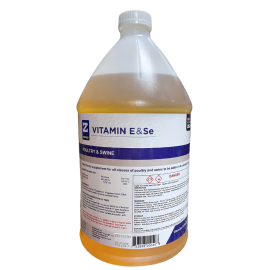
  • Pipestone Lamb Feed Vitimain E and Selenium Premix is an easy, economical way to raise the Vit. E - Selenium level in your sheep. It is a must before breeding to improve ovulate rate and before lambing to prevent white muscle disease.

  • Hypomagnesemia (grass tetany) is a nutritional disease. It is caused by feeding pasture plants grown in soils that are low in available magnesium and high in available potassium. It is most often seen when sheep are grazing cool season grasses or small grain pastures or rapidly growing lush grasses in the spring or fall. Clinical signs are sheep walking with a stiff gait, loss of appetite and avoidance of the rest of the flock. They are nervous, have staring eyes, twitching skin and may also stagger. Treatment can be successful if given early with 50 mL of a saturated solution of magnesium sulfate injected I.V. or rectally. Grass tetany can be prevented by feeding high magnesium mineral salt mixtures.

Coccidiosis

  • For coccidiosisis control mix 2# of 6% Decoquinate (Deccox) per 50# of white salt and feed free choice or mix 2# of 6% Decoquinate (Deccox) per ton of complete feed.

  • About half of our phone call concern coccidiosis. Generally we see the disease clinically in lambs three weeks old to market. It is characterized by dark scours with varying degrees of clinical illness from almost no effect to emaciation and death. Lambs suffering from coccidiosis are more susceptible to other diseases particularly pneumonia.
    Preventation is accomplished by feeding a coccidiostat to ewes prior to lambing and including a coccidiostat in the creep ration. Coccidostats in creep feed may fail due to several reasons: inadequate consumption, unpalatable creep feed, improper creep design or location or improper levels of coccidostats. Of the three cocciodstats commonly used, Deccox, Rumensin and Bovatec, Bovatec is the least effective. Only Bovatec and Deccox are approved for sheep. We presently recommend Deccox in creep rations and we occationally have a few breaks. We suspect that they would be more severe if Deccox was not fed.
    Treatment of clinical coccidiosis is achieved with sulfa antibiotics. We are now choosing from three: Sulfadimethosine (Albon), Sulfamethazine and Sulfaquinoxaline. Sulfaqunioxaline is the most cost effective. Clinically sick lambs may be drenched or if weaned the entire flock may be treated in the drinking water. We generally recommend a three day treatment period repeated weakly until adequate levels of a coccidostat are consumed.
    For producers who prefer pills to liquid drench, Sustain III boluses can be used in lambs over 50#. They can be administered only once as they are a sustained release bolus.

  • Sustain 3 boluses are an effective one-time treatment for Coccidia.

  • Our choice of Coccidia treatment is Sul-Q-Nox (Sulfaquinoxaline 31%).

Parasites

  • Valbazen is our choice for tape worm control - 3cc/100#. Valbazen is not recommended for pregnant ewes in the first trimesters as it can cause birth defects if used at that time.

  • Levasole is an excellent choice for deworming pregnant ewes.

  • Delice is a very economical product for ectoparasite treatment. Its residual activity breaks the life cycle of lice.

  • Taktic is our choice for treating heel mites. Mix 1 oz. per 1 gal. of water, dip feet for one minute.

  • Treat all summer open wounds with Catron IV or screwworm spray to prevent fly strike (maggots).