Dirt Eating Lambs
This time of the year we frequently get phone calls about
lambs eating dirt along the edges of the barn. This is not uncommon in lambs that are
4 to 10 weeks of age, and is most likely due to either Overeating Disease (Type D
Clostridium perfringens) or a lack of mineral in their diet. I have seen an entire
row of lambs lined up along a fence or edge of the barn where there is a good supply
of fresh black dirt. Most commonly these lambs are craving the dirt because the mucosal
lining of their intestinal tract is irritated from the combination of a high grain diet
and bacteria in the digestive system. The typical history is that the flock has fast
growing lambs on a high concentrate diet. This is also very common in feedlot lambs
that are being fed a high percentage of grain.
We see more Type D overeating and cases of polioencephalomalacia
(lack of vitamin Bl) every year as sheep producers feed higher levels of grain rations and
less amounts of roughages such as hay. You must remember that the sheep is a ruminant
animal that evolved over the centuries by eating grass and roughages. When we feed
grain-based rations to lambs, they cause the bacteria in the rumen to change to bacteria
that can live in a more acidic environment. Grain diets lower the pH of the rumen due
to the fermentation of the starches and sugars found in the grain. By contrast, the
feeding of roughages like hay tends to raise the pH and buffer the rumen. Also, the
fiber in the hay tends to stimulate rumen and intestinal movement to help aid in the
digestive process. The reason we see more polio in grain fed lambs is due to a combination
of the lower pH destroying the enzymes that are part of the thiamin (vitamin Bl) pathway.
Green leafy material is the best source of vitamin Bl.
Lambs that are fed high grain diets will, over a 3 to 4 week
period, become acclimated and their rumen pH will become more acidic. The higher level
of acid will decrease both rumen motility and movement in the intestinal tract. Type D
overeating occurs when the fermented grain and some Clostridium perfringens bacteria flow
from the rumen into the small intestine releasing a toxin, which damages the mucosal lining
of the small intestine. One of the most effective tools producers can use to prevent
losses to type D overeating and polio is to offer fresh, high quality green alfalfa to
the lambs on a daily basis at the rate of 1/ 4 to 1/2 pound per day. The other critical
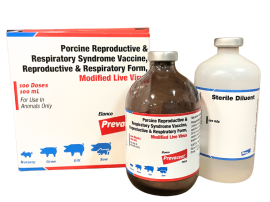
tool is vaccination with a Clostridium perfringens Type D bacterin toxoid at 5 weeks, 8
weeks and 10 weeks of age. All type D vaccines will recommend only two shots, but due to
the real world and timing of the shots, I find it is much more successful to give a series
of three shots. The majority of the lambs will receive two of the shots within the correct
age bracket. The vaccine is fairly inexpensive. The actual labor involved with catching
and handling the lambs seems to be a limiting factor.
For problem flocks, other things that will help in reducing
death losses are using yeast in the feed, which is an excellent source of thiamin, and
using a flavored rumen buffer such as sodium bicarbonate.
Lambs that have Type D are found dead. They can be normal
in the morning and dead within 12 hours. Necropsy lesions can be obvious or very subtle.
All sudden-death lambs should be posted by a veterinarian. Lambs that have polio are
often found lying on their sides, paddling their feet much like they are running a race.
Treatment of polio lambs with l0cc's of vitamin B complex and 5cc's of Predef 2x daily
can be very rewarding. Polio lambs require removal of the brain for a necropsy diagnosis.
If you are going to “push” your lambs with high concentrate diets:
- Have a good vaccination program.
- Change rations slowly over a 2 week period.
- Keep some quality roughage in the diet.
- Work with a nutritionist.
- Necropsy all sudden deaths.
A lamb's rumen activity begins to develop at about six
weeks of age. Feed them like a ruminant. Many producers are feeding lambs only high
concentrates and wonder why they have polio and Type D deaths. If you feed your lambs
high concentrates you need to have a high quality program and a solid understanding of
rumen nutrition.
J. D. Bobb, D.V.M.
International SheepLetter
Vol. 19 No. 4, May-June 1999
Back